

The gut and thyroid are intricately connected through what’s known as the gut-thyroid axis. The gut microbiome, consisting of the diverse range of bacteria in the digestive system, plays a crucial role in regulating thyroid function and overall health. Key functions of the microbiome include:
● Nutrient absorption
● Production of B vitamins and Vitamin K
● Fermentation of fibre
● Neurotransmitter signalling
● Regulation of immune system function
Thyroid and Digestive Disorders
Thyroid dysfunction is frequently associated with digestive issues. Common autoimmune thyroid conditions like Hashimoto’s Thyroiditis and Graves' Disease are often linked to Coeliac Disease and Non-Coeliac Gluten Sensitivity. This connection is thought to be due to damage to the intestinal barrier—a layer of cells that lines the small intestine.
A healthy intestinal barrier is selectively permeable, allowing nutrients to pass into the bloodstream while preventing harmful substances from crossing through. However, when this barrier is compromised, it becomes hyperpermeable, allowing larger molecules such as undigested food particles, bacteria, and toxins to enter the bloodstream. This can trigger an inappropriate immune response, leading to inflammation and immune reactions which have the potential to exacerbate thyroid conditions.
Research has shown that people with thyroid disorders are more likely to experience certain intestinal pathogens:
● Helicobacter pylori infection has been linked to Hashimoto's Thyroiditis
● Yersinia enterocolitica has been associated with Graves' Disease
These pathogens may influence thyroid function by modulating immune responses and directly affecting the gut microbiota.
Small Intestinal Bacterial Overgrowth (SIBO) and Hypothyroidism
SIBO, which is an overgrowth of bacteria in the small intestine, has also been linked to hypothyroidism. Reduced thyroid function can slow down digestive transit time and motility, creating an environment in which harmful bacteria can proliferate. This slows digestion, potentially worsening symptoms like bloating, constipation, and nutrient malabsorption.
Thyroid Hormones and Digestion
Thyroid hormones play a direct role in the functioning of the digestive system:
● Hypothyroidism (underactive thyroid) slows down digestive processes, leading to delayed gastric emptying. Constipation is often a common side effect experienced by those with an underactive thyroid.
● Hyperthyroidism (overactive thyroid) may speed up digestive motility, which can result in diarrhoea and malabsorption of nutrients.
Additionally, excess Thyroid Stimulating Hormone (TSH) has been shown to reduce the production of bile acids, which are essential for breaking down dietary fats. This can contribute to abdominal pain, cramps, bloating, diarrhoea and general digestive discomfort.
Gut Dysbiosis and Immune Function
An imbalance between beneficial and pathogenic bacteria in the gut—known as dysbiosis—can contribute to autoimmune thyroid disease. One key factor is the production of butyrate, a short-chain fatty acid generated when beneficial gut bacteria ferment dietary fibre. Butyrate helps to maintain intestinal barrier integrity, preventing intestinal permeability and reducing inflammation. And as mentioned above when the gut barrier is compromised, bacterial products can cross into the bloodstream, triggering an immune response and potentially worsening autoimmune thyroid conditions.
The Role of the Gut Microbiome in Autoimmune Thyroid Disease
Autoimmune thyroid diseases, such as Hashimoto’s Thyroiditis and Graves' Disease, are thought to arise from the interaction of genetic predisposition, immune dysregulation, and environmental factors—including micronutrient deficiencies, imbalances in the gut microbiota, stress, exposure to viral infections and much more. The gut microbiota plays a pivotal role in regulating the immune system, particularly through:
● Modulation of both the innate (the body’s first line of defence against harmful substances) and adaptive immune systems
● Influencing the development of gut-associated lymphoid tissue (GALT), where over 70% of the body's immune system is located.
So supporting the gut and addressing whether there are any pathogenic bacteria that may be driving any symptoms can be hugely beneficial and in many cases, bring about an improvement in symptoms.
Coeliac Disease, Gluten Sensitivity and Thyroid Health
● As mentioned above, Coeliac Disease is an autoimmune condition in which the protein gliadin (found in gluten) triggers an immune response that leads to inflammation and atrophy of the small intestine’s absorptive surface. This damage increases intestinal permeability and impairs nutrient absorption.
● Non-Celiac Gluten Sensitivity shares many symptoms with coeliac disease but likely involves an activation of the innate immune system rather than the adaptive immune system.
Both of which can impact thyroid health via something called molecular mimicry. It occurs when proteins from foreign sources (gluten) and self (thyroid) are similar in structure. Therefore, many sufferers of thyroid conditions (whether autoimmune or not), can often experience an improvement in symptoms and a reduction in inflammation and antibodies following its removal from the diet.
Conclusion
The relationship between the thyroid and the gut is multifactorial, with disturbances ineither system potentially affecting the other. Maintaining a healthy gut microbiome and intestinal barrier function is crucial for regulating thyroid health and managing autoimmune thyroid diseases.
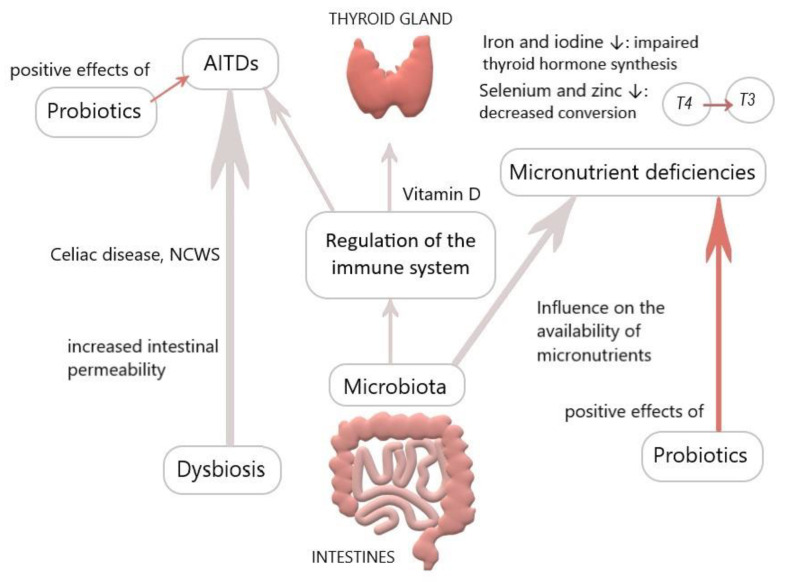
Overview of the influence of the gut on the thyroid
Further Support at Body Fabulous
Thyroid Balance Report: A DNA mouth swab test to assess genes that can increase your risk to thyroid disease, inflammation and autoimmunity
Thyroid Function with Antibodies: A blood test to assess thyroid hormone levels including thyroid antibodies for an in-depth picture of your thyroid health.
GI360: A Stool test to assess the composition of the microbiome including pathogenic bacteria, H Pylori, parasites and more. All of which can impact thyroid health and function.
Book a General Advice Call : Speak with our clinical team who can advise on the right testing or supplements based on your symptoms and needs.

